Pediatric Eye Exam
시술

Pediatric Eye Exam

Protecting your child's eye health with 6 precision tests

Overview

Procedure Overview at a Glance

Check key details including procedure time, recovery period, and anesthesia method

Visual Acuity Test
Visual Acuity TestInfant refractometer
Binocular Vision Test
Binocular Vision TestBinocular coordination assessment
Strabismus Test
Strabismus TestEye alignment check
Refraction Test
Refraction TestAutorefractor (myopia, hyperopia, astigmatism)
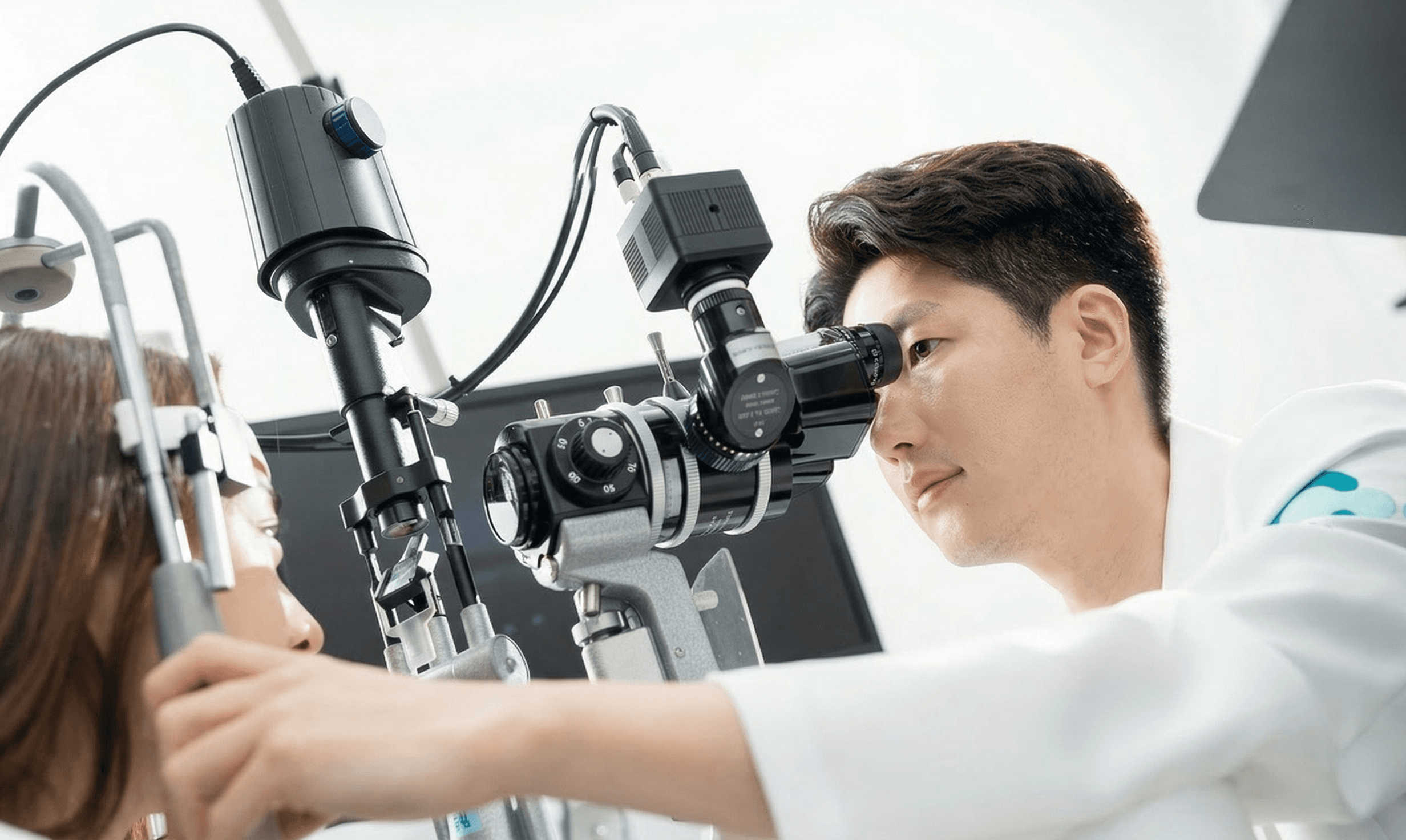
Corneal Examination
Corneal ExaminationSlit lamp microscopy
Fundus Examination
Fundus ExaminationNon-mydriatic wide-angle fundus camera
For You

Recommended For

We recommend a consultation if you have any of the following concerns

Newborn to 3 months

Newborn to 3 months Corneal reflex, congenital cataract, pupil reflex, external eye exam, strabismus test.

Age 3-5 (Visual Development)

Age 3-5 (Visual Development) Age when visual acuity testing becomes possible. Includes corneal reflex, congenital cataract, pupil reflex, external eye exam plus visual acuity test.

Age 6-20 (Growth Period)

Age 6-20 (Growth Period) Monitor myopia progression with refraction tests and regular check-ups. A critical period for rapid myopia progression requiring regular examination.

Children with family history

Children with family history Early screening is especially important when parents or close relatives have history of strabismus, amblyopia, or high myopia.

Children who watch TV or read books up close

Children who watch TV or read books up close Watching TV or reading too close can signal myopia progression; early eye examination is recommended.

Children who frequently rub or squint their eyes

Children who frequently rub or squint their eyes Frequent eye rubbing or squinting may indicate vision problems or eye conditions, requiring professional examination.

Results

Expected Results After Treatment

Discover clinically proven treatment outcomes

Early Detection
Early Detection
Age-Specific Screening
Amblyopia & Strabismus Prevention

Worried about treatment? Let AI guide you

Get your treatment questions answered now

Our Edge

What Makes Us Different

Extensive clinical experience and cutting-edge equipment for better outcomes

Non-Contact Infant Testing
Non-contact infant-specific equipment enables accurate testing even for uncooperative children.
Optimized Lenses
Optimized Lenses
Best Equipment
Best Equipment
Equipment

Premium Equipment for Precise Treatment

We operate globally recognized state-of-the-art equipment

Treatment Process

How We Treat

From precise examination to customized treatment, step by step

FAQ

Frequently Asked Questions

Common questions patients ask before the procedure

Q. When should my child start eye exams?First comprehensive eye exam is recommended at age 3. If there is a family history of strabismus or amblyopia, screening should begin at age 1.
Q. Can uncooperative children be examined?Yes, non-contact infant-specific equipment like Vision Screener enables accurate testing from 6 months of age, even for uncooperative children.
Q. What conditions can be detected?Early detection of amblyopia, strabismus, refractive errors (myopia/hyperopia/astigmatism), congenital cataracts, congenital glaucoma, and retinal conditions.
Q. Can treatment start immediately after diagnosis?Yes, treatment plans including glasses correction, patching therapy, and amblyopia training are established immediately for optimal treatment within the visual development period.
Precautions

Pre & Post Procedure Precautions

Please follow these guidelines for optimal results

Follow Screening Schedule
Follow Screening ScheduleFirst comprehensive eye exam at age 3, followed by annual screenings to track vision changes.
Visual Development Window
Visual Development WindowVisual development completes by age 8; amblyopia treatment must begin before then.
Limit Screen Time
Limit Screen TimeExcessive screen time accelerates myopia progression. Avoid use in dark environments and increase outdoor activities.
Related

Related Conditions Worth Knowing

Learn about similar symptoms and related conditions

Related Videos

Need Eye Care Consultation?

Our specialists will guide you with care